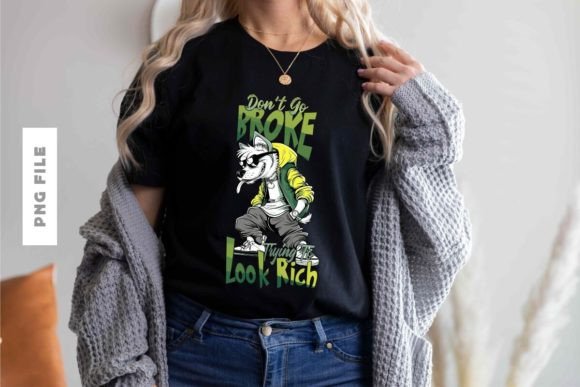
Don't Go Broke: The T-Shirt Design That Sells Itself
There's a particular kind of design that makes you stop mid-scroll. It's not just about clever wording or trendy graphics—it's the combination of a message that resonates and an execution that feels intentional. The Don't Go Broke T-shirt Design lands squarely in that category. It speaks to the hustle, the grind, the quiet determination of anyone building something from scratch, and it does so with a visual style that's bold enough to stand on its own without needing explanation.
What separates a forgettable print-on-demand product from one that actually moves units? Often, it comes down to design quality. A concept might be brilliant, but if the file is low-resolution, the colors bleed during sublimation, or the layout looks amateurish on a hoodie, the idea dies on the shelf. This particular design arrives as a 300 DPI PNG and PDF file, ready to print without the headache of reformatting or upscaling. For anyone running a clothing brand, managing an Etsy shop, or experimenting with merchandise for the first time, that kind of readiness matters more than most people realize.
Why This Design Works Across So Many Products
One of the most practical strengths of the Don't Go Broke T-shirt Design is its versatility. The composition doesn't rely on a specific background color or fabric texture to look good. Whether you're pressing it onto a black crewneck, a pastel tote bag, or a ceramic mug, the design maintains its visual impact. That adaptability isn't accidental—it's the result of thoughtful contrast, balanced spacing, and a layout that breathes well on both large and small surfaces.
Consider the range of products where this design fits naturally:
- T-shirts and hoodies for streetwear brands or motivational apparel lines
- Posters and wall art for home offices, co-working spaces, or studio walls
- Tote bags for entrepreneurs who want their daily carry to reflect their mindset
- Mugs and drinkware that become conversation starters at the office
- Digital mockups for social media content, product launches, or brand presentations
The file format matters here. A PNG with a transparent background gives you the freedom to layer the design over any surface color in your mockup software. The PDF version ensures crisp output for professional printing setups, screen printing separations, or large-format poster production. You're not locked into one application, which means a single purchase can fuel an entire product line.
Building a Brand Around a Strong Message
Apparel with a point of view has always outperformed generic graphics. People don't buy a t-shirt—they buy what the shirt says about them. "Don't go brokie" is more than a catchy phrase; it's a declaration. It tells the wearer and everyone who reads it that financial awareness, hustle, and smart money decisions matter. For clothing brands targeting young professionals, side-hustlers, or the entrepreneurial community, this message taps directly into a cultural current that isn't slowing down.
From a brand identity standpoint, anchoring a product line around a design like this gives you a recognizable anchor point. Customers who connect with the message become repeat buyers. They share photos wearing it. They tag your store. That organic engagement is worth more than any paid ad campaign, and it starts with a design that people actually want to wear in public—not just at home, but out where others will see it and ask about it.
Think about how this fits into a broader marketing strategy. You could launch a limited run of hoodies featuring the design, pair it with an Instagram campaign about financial literacy, or bundle it with a digital product like a budgeting planner. The design becomes a visual thread that ties multiple revenue streams together, reinforcing your brand's voice across different platforms and product categories.
Practical Considerations for Print-Ready Files
Anyone who has dealt with print-on-demand services or local screen printers knows the frustration of receiving a design file that technically "works" but falls apart in production. Low resolution, incorrect color profiles, or messy transparency layers can turn a promising product into a customer service headache. The Don't Go Broke T-shirt Design sidesteps those issues by delivering at 300 DPI, which is the industry standard for sharp, professional-quality printing across virtually every method—sublimation, direct-to-garment, screen printing, and heat transfer vinyl.
Here's what that means in practice:
- Sublimation printing requires high-resolution files to prevent pixelation on polyester fabrics. This file meets that threshold without any adjustment on your end.
- Screen printing shops can use the PDF to create color separations cleanly, reducing setup time and minimizing errors.
- DTG (direct-to-garment) printers handle PNG files natively, so uploading to platforms like Printful, Printify, or Gooten is a straightforward process.
- Heat transfer applications benefit from the clean edges and high contrast, ensuring the design looks crisp after pressing.
The unlimited print license is another detail worth highlighting. Some design files come with restrictions that limit how many units you can produce, which creates problems if a product takes off unexpectedly. With this file, you're free to scale production as demand grows—whether that means fifty units for a local pop-up or five thousand for a wholesale order. For small business owners and creative entrepreneurs, that flexibility removes a significant barrier between testing a product idea and committing to real inventory.
Making It Your Own: Customization and Color Adaptability
A common mistake in merchandise design is creating graphics that only look good on one or two color options. The Don't Go Broke T-shirt Design avoids that trap by using a composition that adapts well across the full spectrum of fabric colors. On a white tee, it pops with clean contrast. On a charcoal or navy base, the design holds its own without getting lost. Even on brighter colors—forest green, burgundy, mustard—the layout remains readable and visually balanced.
This matters because customer preferences for apparel colors vary widely. Some buyers gravitate toward neutrals; others want something that stands out at a glance. When your design works across that range, you can offer more SKUs without redesigning anything. More options mean more chances to convert a browser into a buyer, and that translates directly into revenue.
For those building an online store or expanding a print-on-demand catalog, this kind of versatility also simplifies your workflow. Instead of creating separate files for different product colors, you use one design and apply it everywhere. Mockup generation becomes faster. Product listings look more polished. And your brand maintains a consistent visual language across the entire collection, which builds trust with returning customers.
A Design Asset That Earns Its Place in Your Toolkit
Every designer, marketer, or business owner has a folder of assets they reach for repeatedly—the fonts, templates, and graphics that reliably deliver results. The Don't Go Broke T-shirt Design earns its spot in that collection not just because of what it says, but because of how it's built. The file quality is production-ready. The message is evergreen. The visual execution works across platforms, products, and color palettes without requiring modifications.
Whether you're launching your first product line, adding a new design to an established brand, or creating merchandise for a community, event, or content platform, this file gives you a strong foundation to build on. It's the kind of design asset that pays for itself quickly—not because of hype, but because it solves real problems for people who need professional-quality work without the time or budget to commission custom graphics from scratch.
Original work from Universtock, this design reflects a practical understanding of what sells and what prints well. For anyone serious about turning creative ideas into tangible products, that combination of message, quality, and flexibility is exactly what moves the needle.